
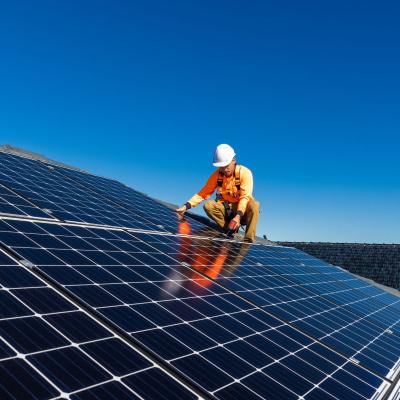
China Withdraws Export Subsidies for Solar Energy Components: What are the Implications for Nigeria?
For years, the global renewable energy market ran on a simple, almost predictable logic: China was the go-to source for affordable components. So, if you needed solar panels, inverters, or lithium batteries, you looked to China, and you expected to get them at prices that were hard to beat.That advantage didn’t happen by accident. Behind the scenes, Chinese manufacturers benefited from export incentives that quietly reduced their costs. When they shipped products abroad, they received tax rebates that effectively made their exports cheaper in international markets. This allowed China to scale rapidly, dominate global supply, and make renewable energy far more affordable worldwide. In countries such as Nigeria, this enabled viable solar projects, expanded electrification, and improved access to clean energy.But success created its own pressure.Over time, the industry became crowded. Too many manufacturers were producing too much capacity. Prices kept falling, margins shrank, and competition turned into a race to the bottom. At the same time, trade tensions began to rise, with other major economies accusing China of flooding global markets with subsidized products. What had once been a growth strategy started to look like a long-term risk—both for the global market and for China’s own industrial base.So, China made a deliberate shift.Beginning in 2026, the government started withdrawing those export incentives. For solar products, including panels, inverters, and related components, the export tax rebates were eliminated. For lithium batteries, the support is being phased out, with a reduction in 2026 (from ~9% to 6%) and full removal by 2027. In practical terms, manufacturers exporting from China will no longer receive the tax refunds that once helped keep their prices low. That cost is now being absorbed into the final price of the product.This is not a sudden disruption. It is a quiet reset.Prices are not expected to spike overnight, but the direction is clear: the era of ultra-cheap, subsidy-supported exports is giving way to more realistic pricing. The market is moving from volume-driven competition to a more disciplined environment where efficiency, technology, and long-term value matter more than simply being the cheapest.For Nigeria, this shift has real implications.The country relies heavily on imported renewable energy equipment, much of it from China. As costs gradually rise, solar projects may become more expensive to deliver. Business cases that once looked straightforward will require more careful structuring. At the same time, the narrowing cost gap may create new opportunities for local assembly, regional partnerships, and more resilient supply strategies.But the most important impact is not on the market; it is on how procurement decisions must be made.The old assumption that “China will always be the cheapest option” is no longer reliable. Procurement professionals will need to move beyond price and focus on total value—looking at lifecycle cost, performance, reliability, and long-term risk. Stronger contract management will also become critical, as rising costs tend to drive more claims, variations, and pressure from suppliers.This is a moment that rewards discipline and foresight.Organizations that act early by strengthening their commercial thinking, diversifying their supply approach, and negotiating from an informed position will protect value. Those who continue to rely on outdated assumptions will find themselves paying more, often without realizing why.Renewable energy fundamentals remain solid, and China will stay central to global supply. What has shifted is the pricing dynamic, and with it, the pressure on procurement decision-makers.The game is still the same. But the rules have shifted.
Read InsightLatest Insights

What the U.S., Israel, and Iran Conflict Means for Global and African Supply Chains
The escalating confrontation involving the United States, Israel, and Iran represents one of the most significant geopolitical risks to global supply chains since the COVID-19 pandemic and the Russia- Ukraine war. Unlike many regional conflicts, this crisis directly threatens the physical corridors through which a substantial share of the world’s energy, shipping, and trade flows move.Three of the world’s most critical logistics chokepoints—the Strait of Hormuz, the Bab el-Mandeb Strait, and the Suez Canal corridor—sit within the potential theatre of escalation. These corridors collectively carry:nearly 20% of the global oil supplyabout 20% of the global LNG tradeapproximately 12–15% of global merchandise tradeDisruptions to these arteries are transmitting shocks across global energy markets, maritime shipping networks, aviation corridors, fertilizer supply chains, and industrial production systems.Early manifestations of disruption already include suspension or rerouting of major shipping routes, increased war-risk insurance premiums for vessels, restricted airspace across parts of the Middle East, and volatility in global energy markets.If the conflict escalates or persists, the consequences could include oil prices exceeding $120–$150 per barrel, significant increases in LNG prices, major increases in freight costs, fertilizer supply disruptions affecting global agriculture, and renewed inflationary pressure across many economies.For African economies, including Nigeria, the implications extend beyond energy markets. Rising shipping costs, fertilizer shortages, and supply delays could affect food security, industrial production, and macroeconomic stability.At the same time, the crisis highlights an important structural shift in the global economy: supply chain resilience is now a strategic capability rather than simply an operational concern.Business leaders and policymakers should therefore view the present disruption not only as a short- term shock but also as a signal that global supply chains are entering an era of persistent geopolitical volatility.Three strategic responses are essential:First, organizations must develop visibility into supply chain vulnerabilities, particularly those linked to critical logistics corridors and energy inputs.Second, firms should diversify logistics routes and supplier networks to reduce dependence on a small number of geopolitical hotspots.Third, governments and industry leaders must accelerate investments in regional supply chains, energy infrastructure, and logistics resilience.For Nigeria and Africa more broadly, the crisis also underscores the strategic importance of expanding domestic refining capacity, strengthening regional trade under AfCFTA, investing in fertilizer production and food systems, and building resilient logistics infrastructure. Organizations that proactively redesign supply chains for resilience will not only manage current disruptions more effectively but also be better positioned to compete in a world where geopolitical shocks are increasingly common.Read our full white paper on this topic here
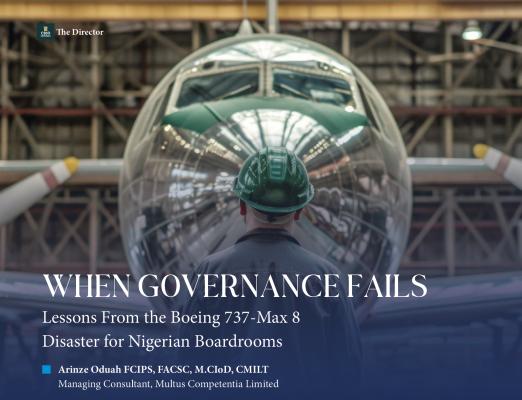
When Governance Fails
‘Across industries, directors face tensions between short-term returns and long-term sustainability, between financial performance and safety, ethics, and compliance.’In this article for the Director Magazine, principal consultant Arinze Oduah highlights why boards must move beyond a short-term financial focus to embed safety, ethics, and sustainability into their governance practices.Read the full article here

Lagos Business School Partners with Multus Competentia to Deliver Strategic Procurement Excellence
Our Managing Consultant, Mr. Arinze Oduah FCIPS, was recently invited as an external resource to Lagos Business School (LBS) to deliver the Strategic Procurement Module of the Developing Analytical Competences for Managers (DACMO) course.Participants unanimously commended his deep expertise, engaging delivery style, and ability to translate complex procurement strategies into practical, real-world applications.What Participants Said:“Mr. Arinze is absolutely fantastic. Extremely knowledgeable, brilliant, and competent in the transfer of knowledge. Excellent.”“He used practical real-life experience to illustrate and explain procurement strategy… very engaging and caught my focus throughout the day.”“The facilitator knows his onions. Very vast in knowledge and understands the subject matter very well. Great class it was!”“In short, we were caught up in a spell being under his tutelage!”“Mr. Arinze did absolute justice to this subject… calm and engaging delivery style, vast knowledge of world history and current affairs, practical and professional.”

Highlights from the CIPS Nigeria Monthly Education Seminar
Earlier this month, our Managing Consultant, Arinze Oduah, shared a presentation on the ‘Strategic Geographic Positioning of Lagos as Trade Hub’ at the CIPS - The Chartered Institute of Procurement & Supply Nigeria Monthly Education Seminar.Senior officials of the Lagos State Government at cabinet level were present, as well as the Director General of the Lagos State Bureau of Public Procurement. The CIPS UK CEO, Ben Farrell MBE, and the CIPS Director for the Middle East, Asia, and Africa, Sam Achampong, were also in attendance.Lagos has the potential to become an important global trade hub, but this requires a significant investment in strengthening the supply chain and trade enablement infrastructure.

Energy Institute’s Energy Sustainability Conference: Balancing Energy Security and Sustainability in Africa
Post-Conference Reflections on Strengthening Africa’s Energy Supply ChainsThe 14–15 November 2024 Energy Institute conference in Lagos Nigeria, themed "Balancing Energy Security and Sustainability in Africa", was a call to action for sustainably addressing Africa's energy challenges and unlocking its immense potential. I was privileged to contribute to these critical conversations through my session, "Strengthening Africa’s Energy Supply Chain: Advancing Local Manufacturing and Infrastructure Development."The Case for Strengthened Supply ChainsAfrica’s energy future—both in fossil fuels and renewables—depends on robust, integrated supply chains. On one hand, there’s an urgent need to pivot towards natural gas as a transitional fuel, given its lower emissions and availability across the continent. On the other, Africa’s renewable energy potential in solar, hydropower, and geothermal remains underutilized. This dichotomy underscores the need for a comprehensive, end-to-end approach to developing Africa’s vast energy potential.Accelerating the Shift to GasNatural gas offers a bridge to cleaner energy systems while addressing Africa's growing energy demand. Yet, supply chain inefficiencies—from limited refining capacity to inadequate distribution networks—delay this transition. Domesticating the manufacture of critical equipment and materials for the natural gas value chain, upgrading existing infrastructure, investing in modern gas processing facilities, and creating regional pipeline networks are critical steps forward.Unlocking Renewable Energy PotentialAfrica’s renewable resources are vast, especially:Solar: Untapped solar energy could meet the continent's energy needs many times over.Hydropower: The Congo River alone could provide up to 100 GW of 350 GW power potential.Geothermal: East Africa’s Rift Valley holds up to 15 GW of geothermal potential.However, over 70% of the technology used to harness these resources is imported. By developing local manufacturing capabilities, Africa can reduce costs, create jobs, and increase energy access.A Vision for Local ManufacturingFor Africa to fully benefit from its energy resources, it must control key parts of the value chain. Take solar energy as an example: Africa possesses the critical minerals needed for solar panels, batteries, and installation kits. Policies that prioritize maximum in-country value added in mineral extraction, manufacturing, and installation at micro, mini, and utility scales can help transform these resources into self-reliant energy systems.Such an ecosystem demands:Investment: Long-term financial commitments to build manufacturing hubs.Policies: Tax incentives, streamlined regulations, and trade facilitation through initiatives like AfCFTA.Capacity Building: Training a skilled workforce in energy technologies.Strategies for Infrastructure DevelopmentAccessing energy resources means overcoming infrastructure bottlenecks. Pipelines, storage facilities, and decentralized mini-grids can connect rural areas to the energy grid while enabling manufacturing clusters. Public-private partnerships (PPPs) have proven effective in financing and executing such projects globally, and similar models can thrive in Africa.Policy, Innovation, and Long-term CommitmentAchieving energy independence requires an alignment of policy, strategy, and innovation:Green Finance: Mobilizing funds through green bonds and impact investments can accelerate the transition to renewable energy.Technology Transfer: Collaborations with global firms can enhance Africa’s technical capabilities.Integrated Supply Chains: Leveraging AfCFTA to build cross-border networks for raw materials and finished goods.Concluding ReflectionsThe Energy Institute conference emphasized that Africa’s energy story is at a pivotal moment. Strengthening energy supply chains isn’t just about meeting immediate demands—it’s about securing a sustainable and prosperous future. With an integrated approach, Africa can harness its resources to power industries, drive development, and assert itself as a leader in the global energy landscape.The path forward requires political will, transnational collaboration, bold strategies, and unwavering commitment over the long term. Together, we can transform challenges into opportunities and deliver energy solutions that resonate across generations.

Supply Chain Visibility and Collaboration Platforms: Enhancing Efficiency and Responsiveness
Summary"Global supply chain visibility and collaboration have proven to be game changers in the industry, with companies reporting up to a 30% reduction in lead times and 15% savings on logistics costs, according to McKinsey’s research on end-to-end supply chain management.” According to Gartner, organizations with high visibility and collaboration improve overall efficiency by 15-25%, translating directly to higher profits.Industry analysts estimate that global supply chains could save up to $1.5 trillion annually through improved visibility and collaboration, which would encompass inventory optimization, logistics savings, and disruption avoidance.The global supply chain visibility market alone is expected to grow from $3.8 billion in 2023 to $7.4 billion by 2028. This opportunity is immense, and Nigeria’s supply chains stand to gain substantially as we seek to strengthen our competitiveness in a rapidly globalizing economy.This growing investment in supply chain visibility is transforming how industries operate. The journey from opaque, slow-moving supply chains to agile, data-driven systems can make a difference of millions in savings and faster time-to-market, empowering companies to stay resilient and responsive even amid unexpected disruptions.IntroductionSupply chain visibility is the ability to view or track inventory as it moves through the supply chain. Supply chain visibility is the complete, end-to-end view of a company's logistics, inventory, and warehouse management processes and people in real time.Supply chain collaboration involves coordinating with internal departments and external partners to sustain an optimized supply chain flow, efficiently meet demand, and ensure on-time, in-full delivery.It means establishing real-time shared visibility and processes with supply chain partners to facilitate the identification and resolution of issues.Supply chain collaboration encompasses the full scope of supply chain functions, including purchase order processes, forecasting, capacity planning, and quality management.Real-World Examples of Tangible BenefitsFinancial Savings & Waste Reduction through Real-Time Data SharingProcter & Gamble’s (P&G) Cost Savings: Through real-time collaboration platforms, P&G has reduced its overall supply chain costs by around 10%. By sharing data in real-time with suppliers and logistics providers, they have cut excess inventory by 20% and avoided waste associated with product expiries.Zara’s Fast-Fashion Lead-Time Reduction: Zara’s supply chain visibility is one of the reasons behind its success in fast fashion. By having near-instant data from manufacturing to store inventory, Zara can adjust production based on demand and has achieved lead times as low as two weeks from design to store, compared to the industry standard of six months. This has boosted profitability and reduced markdowns significantly.Improved Inventory Management & Customer SatisfactionWalmart’s “In-Stock” Initiative: Walmart uses visibility technology to monitor product availability across its stores, reducing stock-outs by more than 16%. The ability to track and replenish stock dynamically has resulted in higher customer satisfaction and increased sales. Walmart’s improved inventory management has saved it an estimated $2 billion annually.Amazon’s Lead-Time Reduction & Profit Growth: Amazon’s supply chain visibility has reduced delivery lead times by 20-30% through optimized warehouse locations and real-time tracking. This agility has enabled Amazon to deliver over half of its orders in two days or less, contributing to over $5billion in annual profit.Collaboration for Responsiveness During CrisisFord’s Supplier Network during the Semiconductor Shortage: Ford’s real-time data sharing and collaboration with suppliers helped it reallocate semiconductor supplies to high-demand models, sustaining production and revenue when others struggled. Visibility reduced lead times for sourcing alternative suppliers by about 30%, minimizing revenue loss during the crisis.Reduced Emissions and Increased SustainabilityUnilever’s Emission Reductions: By implementing visibility tools to monitor the carbon footprint of its logistics, Unilever reduced transportation emissions by over 10% in Europe. This aligned with its sustainability goals and attracted eco-conscious consumers, boosting the brand's reputation.Key Technologies for Visibility and CollaborationCloud-based Platforms (SAP Ariba, Oracle SCM Cloud): Enables seamless data access across geographies, allowing real-time inventory and supplier management.Internet of Things (IoT): Track shipments and monitor conditions (e.g., temperature for perishables) in real-time, as used by Maersk and DHL to reduce spoilage and ensure quality.Blockchain for Secure, Transparent Records: Blockchain ensures immutable, shared records in the supply chain. Walmart’s food traceability project on IBM’s blockchain reduced the time to track produce origins from weeks to seconds.Artificial Intelligence (AI) for Predictive Analytics: AI enhances demand forecasting and identifies optimization opportunities. Coca-Cola uses AI for demand prediction, improving accuracy by over 25% and reducing stockouts.Competencies and Enabling CultureData Analytics and Tech-Savvy Procurement Skills: Organizations need skilled personnel trained in data analytics, logistics technology, and data security. Lagos Business School and other specialized programs can support building these competencies locally.Cross-functional Collaboration & Transparency Culture: Successful visibility requires open data sharing across functions, with clear communication and shared objectives across departments and with partners.Emphasis on Trust and Agility: Agility is achieved through a culture that prioritizes rapid response and transparency, allowing quick decision-making in line with the organization’s objectives.Risks, Opportunities, and BenefitsRisks:Data Security Concerns: Increasing visibility across networks can expose organizations to cybersecurity threats.Adoption Challenges and Resistance to Change: Transitioning from legacy systems can be challenging, requiring training and cultural adaptation.Opportunities:Enhanced Resilience and Agility: Visibility prepares companies to respond quickly to supply chain disruptions, safeguarding revenue.Data-Driven Decision Making: Real-time data allows organizations to proactively make informed decisions, leading to operational and financial improvements.Benefits:Financial Savings & Operational Efficiency: Companies with integrated visibility systems see 15-20% savings in logistics costs, according to McKinsey. Real-time visibility reduces inventory costs and enhances speed.Sustainability and Reduced Waste: With insights into logistics and sourcing, companies can cut emissions, achieve sustainability targets, and align with global supply chain standards.What’s Next: Beyond Visibility and CollaborationThe next big wave in supply chain management will be the integration ofautonomous systems and predictive analytics, aiming to create self-learning supply chains that adapt and respond to trends and disruptions automatically. These systems leverage AI and machine learning to:Automate Supply Chain Adjustments: Self-learning algorithms will make real-time adjustments without human intervention, such as rerouting shipments and recalibrating production schedules.Predict and Preempt Disruptions: Predictive analytics will anticipate market changes or risks, allowing organizations to pivot before disruptions occur.Enhance Customer-Centric Strategies: Using insights from autonomous systems, supply chains will become even more responsive to customer demands, tailoring production and distribution accordingly.How Organizations Can Prepare:Invest in AI and Machine Learning Expertise: Building or sourcing AI capabilities is essential to stay competitive as the technology evolves.Collaborate with Technology Partners: Partner with leading-edge technology providers to pilot autonomous systems and predictive solutions.Embed a Continuous Improvement Culture: Cultivating a mindset of innovation within the supply chain will allow organizations to be at the forefront of adopting autonomous, self-learning systems.ConclusionToday’s supply chains must be responsive and self-learning to be competitive. This requires an intentional, significant and continuing investment in developing supply chain visibility and collaboration. For organizations in Nigeria, this journey can make us leaders in Africa’s evolving supply chain landscape. By embracing visibility now and positioning for autonomy tomorrow, we can turn supply chains into powerful engines of resilience and growth in the fiercely competitive global market. Let's therefore seize this moment to make Nigerian supply chains the benchmark for excellence.